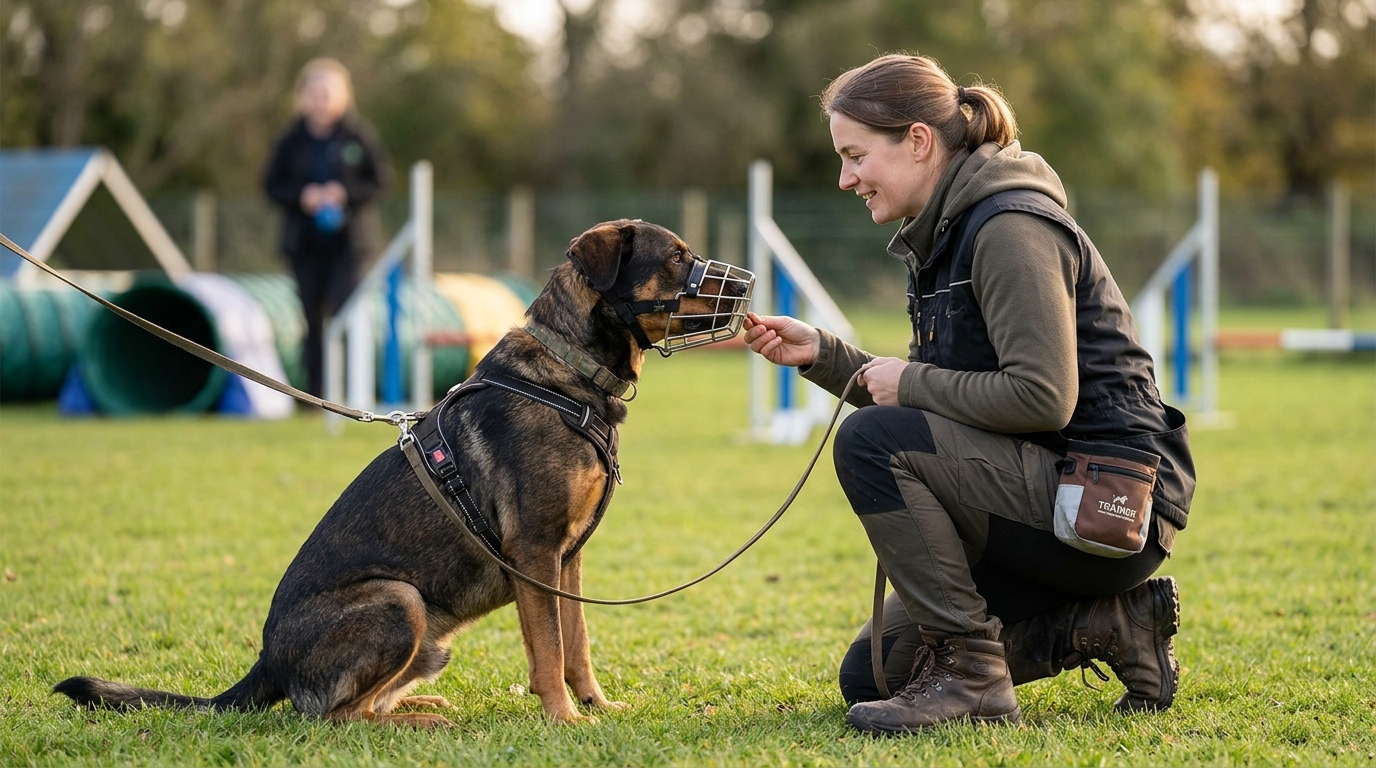
Training an aggressive dog isn’t something that happens overnight. Some dogs show improvement within a few weeks, while others may need several months—or even longer. The timeline depends on why your dog is aggressive, how long the behavior has been happening, and how consistently you work with them.
The good news is that many dogs can make meaningful progress with patience, positive training, and the right approach.
As someone who enjoys researching pet behavior, one thing I’ve learned is that many owners give up too soon because they expect dramatic changes within days. In reality, successful training is usually built on small improvements that add up over time.
Quick Answer
Most aggressive dogs need between three and six months of consistent training before owners notice significant improvement. Mild cases may improve within a few weeks, while severe aggression can take a year or longer to manage. The goal isn’t simply to stop aggressive behavior—it’s to help your dog feel safe enough to make better choices.
Why Every Dog Learns at a Different Pace
If you’ve searched online, you’ve probably seen stories like:
“My dog stopped being aggressive in two weeks.”
Then you wonder why your dog hasn’t improved after a month.
The truth is that comparing dogs rarely helps.
Imagine teaching two people to swim. One has never been in the water, while the other has spent years avoiding it because of fear. Even with the same instructor, they won’t learn at the same speed.
Dogs are no different.
Every dog has a unique history, personality, and learning style.
What Affects How Long Training Takes?
1. The Cause of the Aggression
This is the biggest factor.
Aggression isn’t a personality trait—it’s usually a response to something.
Some common causes include:
- Fear or anxiety
- Protecting food, toys, or family members
- Territorial behavior
- Frustration
- Pain or illness
- Poor socialization
A dog reacting because of arthritis may improve quickly once the pain is treated. A dog with years of fear-based aggression will often need much more time and patience.
2. How Long the Behavior Has Been Happening
Behavior becomes stronger the more it’s repeated.
If your dog has barked and lunged at other dogs on every walk for three years, that reaction has become a habit.
Changing habits takes time.
That doesn’t mean improvement isn’t possible—it simply means patience is essential.
3. Your Consistency
One overlooked truth is that consistency beats intensity.
Many owners train for an hour on Saturday but do nothing for the rest of the week.
A better approach is:
- 5–10 minute sessions
- Daily practice
- Calm repetition
- Positive reinforcement
Dogs learn through repetition, not marathon training sessions.
4. Your Dog’s Age
Puppies often learn new behaviors more quickly because they’re still developing.
Adult and senior dogs can absolutely learn too—it may simply take a little longer to replace old habits with new ones.
Remember the saying:
You can’t change yesterday, but you can influence tomorrow.
5. Your Dog’s Health
Sometimes aggression is your dog’s way of saying something hurts.
Pain from:
- Dental disease
- Ear infections
- Arthritis
- Injuries
can all affect behavior.
If aggression appears suddenly, it’s always worth speaking with your veterinarian before focusing only on training.
A Realistic Timeline
While every dog is different, here’s what many owners experience.
| Time | What You May Notice |
|---|---|
| Week 1–2 | Learning routines, identifying triggers, beginning to trust training sessions. |
| Weeks 3–6 | Slightly calmer reactions and improved focus in controlled situations. |
| Months 2–3 | Better self-control, quicker recovery after seeing triggers, more confidence. |
| Months 4–6 | Consistent improvement for many dogs when training has been regular. |
| 6 Months and Beyond | Continued progress, with management strategies becoming part of everyday life. |
Don’t worry if your dog’s journey looks different.
Progress isn’t always a straight line.
The Mistake Many Owners Make
One thing I noticed while researching this topic is that people often judge progress by asking:
“Did my dog bark today?”
Experts tend to ask a different question:
“Did my dog recover faster than yesterday?”
That small shift changes everything.
Imagine your dog used to bark for five minutes after seeing another dog.
Now they settle down in thirty seconds.
That’s real progress—even if the barking hasn’t disappeared completely.
Small Wins Matter More Than You Think
Training success doesn’t always look dramatic.
Celebrate improvements like:
- Looking at you instead of another dog.
- Recovering more quickly after being startled.
- Walking past a trigger at a greater distance.
- Remaining calm for a few extra seconds.
- Responding to a familiar cue despite distractions.
These moments show your dog is learning, even if the changes seem small.
Why Some Dogs Seem to Get Worse Before They Get Better
This surprises many owners.
You might have a fantastic week, followed by a difficult walk where your dog reacts to everything.
That doesn’t necessarily mean training has failed.
Just like people, dogs have good days and bad days.
Changes in routine, stress, lack of sleep, illness, or an unfamiliar environment can temporarily affect behavior.
Instead of focusing on one bad day, look at the bigger picture over several weeks.
Can Aggression Ever Be Completely Cured?
This is one of the most common questions pet owners ask.
The honest answer is:
Sometimes—but not always.
Some dogs become so comfortable that aggressive behavior rarely appears.
Others continue to need careful management around certain triggers.
Success isn’t always about eliminating aggression completely.
Sometimes success means:
- Safer walks.
- Better communication.
- Fewer reactions.
- Faster recovery.
- Less stress for both you and your dog.
That’s still a huge achievement.
How to Speed Up Training (Without Rushing It)
While you can’t force progress, you can create the best conditions for learning.
Try to:
- Keep training sessions short and positive.
- Reward calm behavior immediately.
- Avoid punishing growling or warning signals.
- Give your dog regular physical and mental exercise.
- Learn your dog’s body language.
- Practice in environments where your dog can succeed.
- Stay patient when setbacks happen.
Consistency almost always beats perfection.
When Should You Get Professional Help?
Home training works well for many dogs, but some situations require extra support.
Consider contacting a qualified behavior professional if your dog:
- Has bitten a person.
- Repeatedly attacks other animals.
- Shows aggression without obvious warning.
- Becomes more aggressive despite training.
- Is difficult to control safely.
Seeking help early can prevent problems from becoming more serious.
Frequently Asked Questions
Can an aggressive dog improve in one month?
Some dogs show noticeable improvement within a month, especially if the aggression is mild. However, lasting behavior change usually takes longer.
Is it ever too late to train an aggressive dog?
No. Dogs of all ages can learn new behaviors, although older dogs may need more time and patience.
Why does my dog improve one day and regress the next?
Setbacks are a normal part of learning. Stress, changes in routine, illness, or unfamiliar environments can temporarily affect behavior.
How often should I train my aggressive dog?
Short daily sessions are usually more effective than occasional long sessions. Aim for 5–10 minutes, two or three times a day if possible.
Should I stop walking my aggressive dog?
Not necessarily. Instead, choose quieter places where your dog can practice staying calm without becoming overwhelmed.
Pet Researcher’s Tip 🐾
While researching this topic, I noticed that many owners focus on how long training will take instead of how much progress their dog is making. The dogs that improve the most often have owners who celebrate small victories, stay consistent, and understand that setbacks are part of the process—not signs of failure.
What I Learned While Researching This Topic
One idea kept appearing across trusted veterinary resources and experienced trainers: aggressive dogs don’t follow a calendar.
Some improve surprisingly quickly. Others need months of patient guidance. What matters most isn’t reaching a specific deadline—it’s helping your dog become a little more confident and a little less reactive over time.
That changed the way I think about dog training. Instead of asking, “When will my dog be fixed?” a better question is, “Is my dog making progress?”
Even small steps forward are worth celebrating.
Final Thoughts
Training an aggressive dog takes time, patience, and realistic expectations. While many dogs begin showing improvement within three to six months, every dog learns at a different pace.
Don’t measure success only by the absence of barking or growling. Pay attention to the smaller milestones: quicker recovery, better focus, calmer walks, and increased confidence. Those are often the first signs that your hard work is paying off.
Remember, aggression doesn’t define your dog. With consistent training, a better understanding of their behavior, and a willingness to learn together, many dogs can make remarkable progress.
At Pet Control Pro, our goal is to help you make informed decisions through research-based, easy-to-understand guides. We’re pet lovers and pet researchers—not veterinarians—and we believe that knowledge, patience, and kindness can make a real difference in the lives of both pets and their owners.