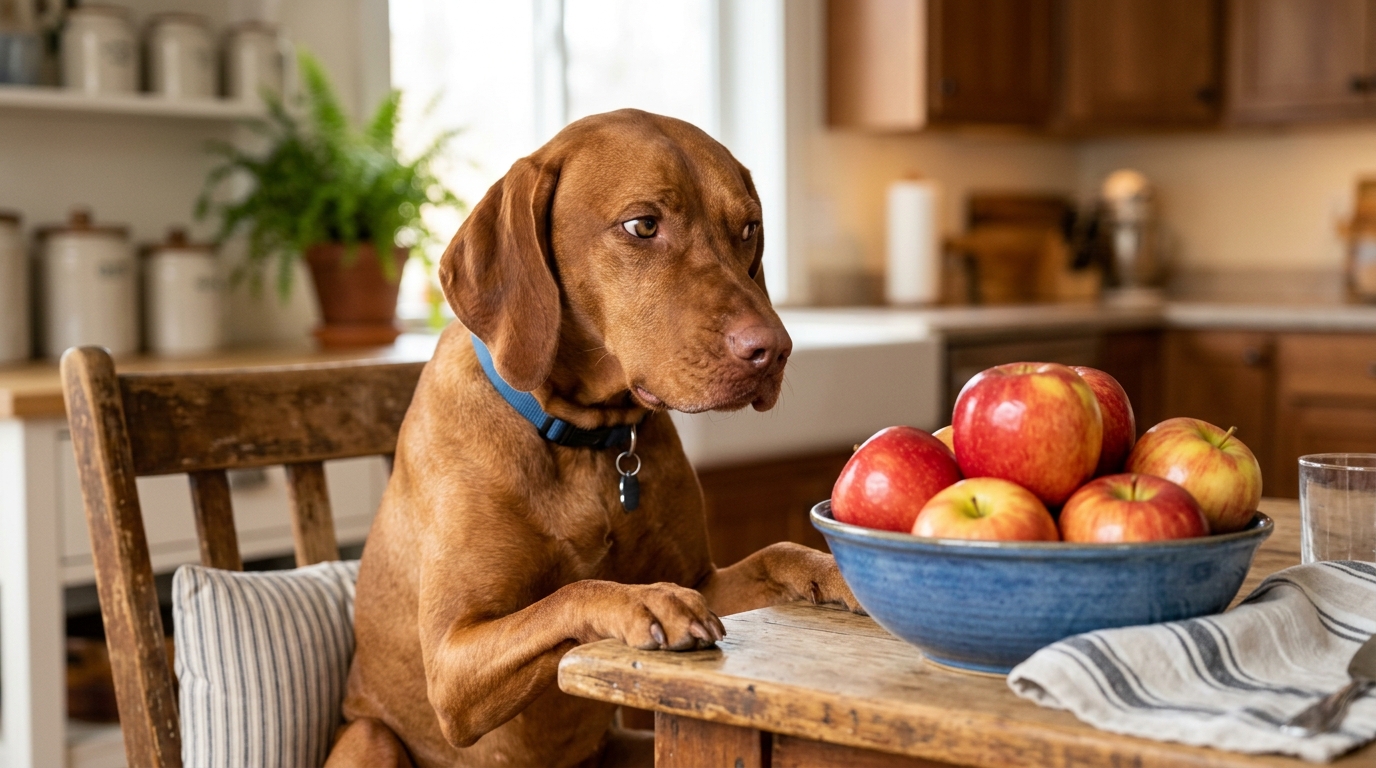
Yes, dogs can eat apples in moderation. Plain apple flesh can be a crunchy, refreshing treat for many dogs.
Apples contain fiber, water, and several vitamins and minerals. But there are a couple of parts you should remove before giving an apple to your dog—particularly the seeds and core.
And like other fruits we’ve covered, an apple should be treated as an occasional addition to your dog’s diet, not a replacement for their normal food.
At Pet Control Pro, we’re pet lovers and researchers, not veterinarians. We research everyday pet-care questions because we love learning about animals and want to make useful information easier for pet owners to understand.
So, let’s look at apples from a practical dog-owner perspective.
Quick Answer
| Question | Answer |
|---|---|
| Can dogs eat apples? | Yes, in moderation |
| Can puppies eat apples? | Generally yes, in small amounts |
| Can dogs eat apple skin? | Yes, if washed and given in appropriate amounts |
| Can dogs eat apple seeds? | No, remove them |
| Can dogs eat the apple core? | Best avoided |
| Can dogs eat applesauce? | Plain, unsweetened applesauce may be okay |
| Can dogs eat apple pie? | Best avoided |
| Can dogs eat dried apples? | Plain, unsweetened pieces can be given occasionally |
| Can apples cause diarrhea? | Yes, especially if a dog eats too much |
Are Apples Safe for Dogs?
Plain apple flesh is generally safe for dogs.
However, how you prepare the apple matters.
A fresh apple cut into small pieces is very different from apple pie, caramel apples, or a sugary apple dessert.
Before giving an apple to your dog:
- Wash it.
- Remove the stem.
- Remove the core.
- Remove all seeds.
- Cut the flesh into suitable pieces.
Then start with a small amount.
What Are the Benefits of Apples for Dogs?
Apples can provide some useful nutrients.
They contain:
- Fiber
- Vitamin C
- Water
- Carbohydrates
- Various plant compounds
The water content can also make fresh apple a refreshing treat.
However, it’s important not to exaggerate these benefits.
Your dog doesn’t need apples to get vitamin C or fiber if they’re already eating a nutritionally complete diet.
Think of apple as a treat with some nutritional value, rather than a necessary health food.
Can Dogs Eat Apple Skin?
Yes, dogs can generally eat the skin of an apple.
However, wash the apple thoroughly before giving it to your dog.
You can also peel it if you prefer.
The bigger concern isn’t usually the skin itself. It’s making sure your dog doesn’t consume the seeds, stem, or core.
Can Dogs Eat Apple Seeds?
It’s best not to let your dog eat apple seeds.
Apple seeds contain compounds that can release cyanide when the seeds are crushed or chewed.
A few accidentally swallowed seeds are unlikely to cause poisoning in most dogs, but that doesn’t mean you should deliberately feed them.
Why take the risk?
When preparing an apple for your dog, simply remove the seeds and core.
Can Dogs Eat the Apple Core?
It’s better to remove the core.
The core is hard and isn’t particularly useful nutritionally. More importantly, large pieces can be difficult to swallow and can present a choking or digestive obstruction concern.
There’s no real benefit to giving your dog the core.
Cut it out and give your dog the apple flesh instead.
Can Puppies Eat Apples?
Generally, puppies can eat small amounts of apple once they’re eating solid food.
However, puppies are smaller and may have more sensitive digestive systems.
Start with a very small piece.
Make sure it is appropriately sized and easy to chew.
And remember that a puppy’s main diet should be an appropriate complete puppy food—not fruit.
How Much Apple Can a Dog Eat?
There’s no single amount that’s right for every dog.
A small dog and a large dog have different nutritional needs.
The amount should depend on:
- Dog size
- Age
- Weight
- Activity level
- Overall diet
- Health
- Other treats
If you’re introducing apple for the first time, start with a small piece.
If your dog handles it well, you can occasionally offer a few small pieces.
The key is moderation.
Can Dogs Eat Apples Every Day?
They don’t need to.
Apples can be an occasional treat, but your dog doesn’t need fruit every day if they’re eating an appropriate complete and balanced diet.
Giving too much fruit can also add unnecessary calories and sugar.
This is particularly important for dogs that are overweight or have conditions that require dietary management.
Can Dogs Eat Applesauce?
Plain, unsweetened applesauce may be okay for dogs in small amounts.
But check the ingredients carefully.
Avoid applesauce containing:
- Added sugar
- Artificial sweeteners
- Xylitol
- Spices or other ingredients that may be unsafe for dogs
Fresh apple is usually the simpler option.
Can Dogs Eat Dried Apples?
Plain, unsweetened dried apple can be given in small quantities.
But dried fruit is more concentrated because much of the water has been removed.
That means your dog can consume more sugar and calories in a smaller portion.
Also check the ingredients.
Avoid dried fruit products containing added sugar or other unnecessary ingredients.
Can Dogs Eat Apple Pie?
It’s best not to give your dog apple pie.
Apple pie usually contains much more than apples.
Depending on the recipe, it may contain:
- Sugar
- Butter
- Salt
- Spices
- High amounts of fat
- Artificial sweeteners
Your dog doesn’t need these ingredients.
A small piece of plain apple is a much better choice.
Can Dogs Eat Caramel Apples?
No reason to give them one.
Caramel contains a lot of sugar, and caramel apples can also be hard and sticky.
Some products may contain additional ingredients that aren’t appropriate for dogs.
If your dog wants a crunchy treat, give them a small piece of plain apple instead.
Can Apples Cause Diarrhea in Dogs?
Yes.
Eating too much apple can cause digestive upset because apples contain fiber and natural sugars.
Your dog might develop:
- Loose stool
- Diarrhea
- Gas
- Stomach discomfort
- Vomiting
This is why it’s better to introduce new foods gradually.
If your dog experiences persistent vomiting or diarrhea, appears painful, becomes unusually tired, or shows other concerning symptoms, contact your veterinarian.
What If My Dog Eats an Apple Core?
If your dog accidentally eats some apple core, don’t automatically assume something terrible will happen.
The risk depends on factors such as:
- How much was eaten
- The dog’s size
- Whether seeds were swallowed
- Whether the core was chewed
- Whether symptoms develop
Monitor your dog.
If your dog swallowed a large amount, consumed many seeds, or develops concerning symptoms, contact your veterinarian for advice.
How to Give Your Dog an Apple Safely
Here’s the simple process:
1. Wash the apple
Remove dirt and residues from the surface.
2. Remove the core
Cut around the core rather than giving it to your dog.
3. Remove the seeds
Check the pieces carefully.
4. Remove the stem
It’s unnecessary for your dog.
5. Cut the apple
Make pieces appropriate for your dog’s size.
6. Start small
Especially if your dog has never eaten apple before.
7. Observe
Watch for digestive upset.
That’s it.
You don’t need to turn the apple into a complicated recipe.
Common Mistakes Dog Owners Make With Apples
Giving the Whole Apple
This makes it harder to control what your dog consumes and leaves the seeds and core available.
Forgetting the Seeds
Always remove them.
Giving Too Much
Even healthy foods can cause problems when eaten excessively.
Sharing Apple Desserts
Apple pie and other desserts contain additional ingredients.
Ignoring Your Dog’s Diet
Treats should complement your dog’s normal diet, not replace it.
When Should You Be More Careful?
Talk to your veterinarian before regularly adding apples or other treats if your dog:
- Has diabetes
- Is overweight
- Has food allergies
- Has digestive problems
- Has another medical condition
- Is on a prescription diet
Your dog’s nutritional needs aren’t necessarily the same as another dog’s.
Pet Researcher’s Tip 🐾
One thing I like to remind myself when researching foods for dogs is:
The safest version is usually the simplest version.
If you’re wondering whether your dog can have an apple, you don’t need to make apple pie, apple cookies, or a fancy apple treat.
Wash the apple.
Remove the core and seeds.
Cut it into small pieces.
Give a little.
That’s probably all you need.
Frequently Asked Questions
Can dogs eat apples?
Yes. Plain apple flesh is generally safe for dogs when given in moderation.
Can dogs eat apple skin?
Yes. Washed apple skin can generally be eaten by dogs.
Can dogs eat apple seeds?
It’s best to remove them because apple seeds contain compounds that can release cyanide when chewed.
Can dogs eat apple cores?
It’s better to remove the core because it can be difficult to swallow and offers little nutritional benefit.
Can puppies eat apples?
Generally yes, in small amounts once they’re eating solid food.
Can dogs eat applesauce?
Plain, unsweetened applesauce may be okay in small amounts. Check the ingredients and avoid products containing xylitol.
Can dogs eat dried apples?
Plain, unsweetened dried apples can be given occasionally, but they’re more concentrated in calories and sugar than fresh apples.
Can dogs eat apple pie?
It’s best to avoid apple pie because of its added sugar, fat, and other ingredients.
Can apples make dogs sick?
Eating too much apple can cause digestive upset. The seeds and core should also be removed.
Final Thoughts
Can dogs eat apples? Yes.
For most healthy dogs, a small amount of plain apple can be a safe and enjoyable treat.
Just don’t give your dog the whole apple and assume they’ll know which parts to avoid.
Remove the seeds and core, cut the apple into suitable pieces, and start with a small amount.
And remember that apples are treats—not a replacement for your dog’s regular complete and balanced food.
At Pet Control Pro, we’re pet lovers and researchers, not veterinarians. We research common pet questions to help owners understand the basics while being honest about the limits of our experience.
If your dog has a medical condition, follows a special diet, or develops concerning symptoms after eating something new, speak with your veterinarian.