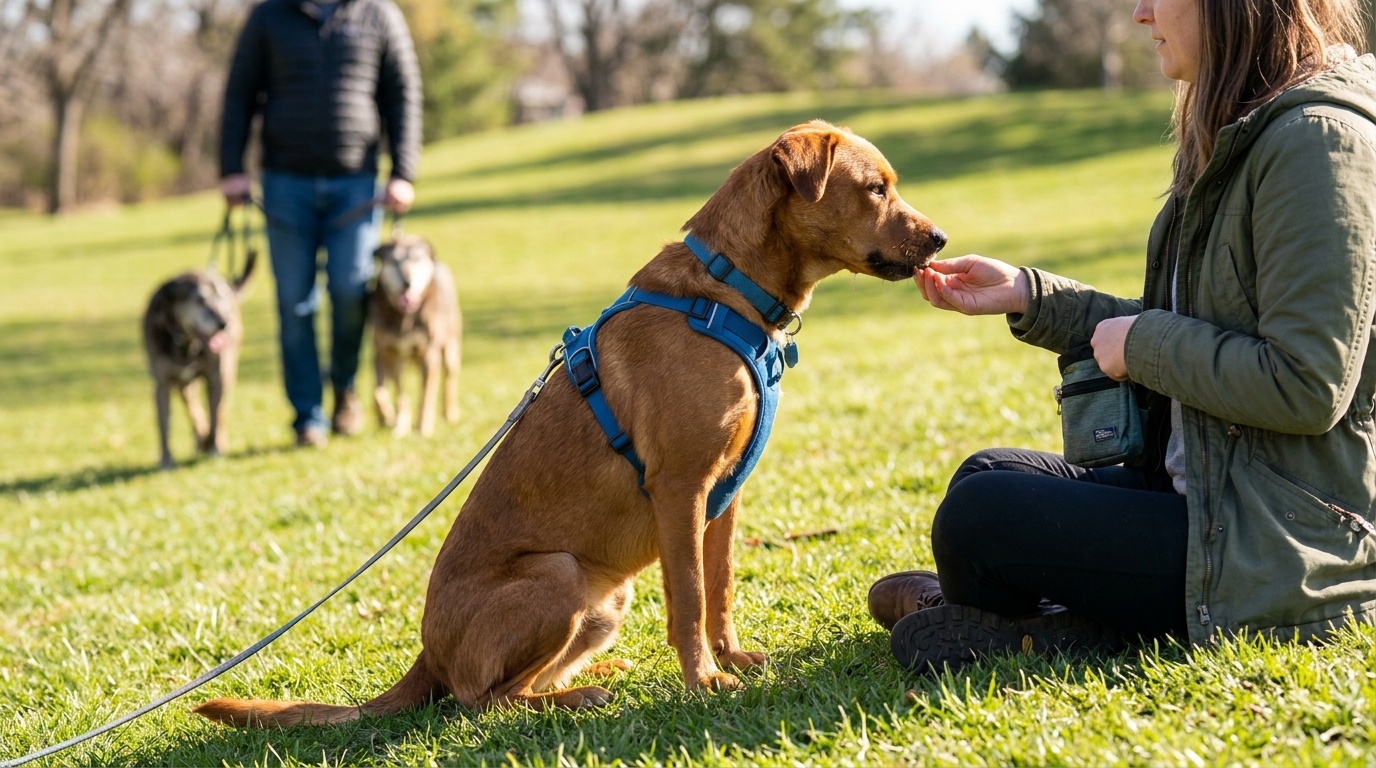
Many people think socialization is only for puppies.
While it’s true that puppies have an important socialization window, adult dogs can also learn to feel more comfortable around people, other dogs, and new environments. It may take a little more patience, but it’s absolutely possible.
Whether you’ve adopted a rescue dog, have a dog that missed early socialization, or simply want your pet to become more confident, taking the right approach can make a huge difference.
As someone who enjoys researching pet behavior, one thing I’ve learned is that socialization isn’t about forcing your dog to meet everyone they see. It’s about helping them feel safe and confident in different situations.
This guide explains how to socialize an adult dog safely, one step at a time.
Important: If your dog has a history of biting or severe aggression, consult a veterinarian or a qualified behavior professional before beginning a socialization program.
Quick Answer
To socialize an adult dog safely, introduce them to new people, dogs, places, sounds, and experiences gradually while keeping them below their stress threshold. Use positive reinforcement, avoid forcing interactions, and allow your dog to progress at their own pace. Successful socialization focuses on building confidence—not simply increasing exposure.
Can an Adult Dog Still Be Socialized?
Yes.
Adult dogs can continue learning throughout their lives.
Although puppies often adapt more quickly to new experiences, adult dogs are fully capable of developing positive associations with people, animals, and environments when introduced carefully.
The process may require more patience than puppy socialization, but age alone doesn’t prevent a dog from learning.
Why Some Adult Dogs Struggle with Socialization
There are many reasons why an adult dog may feel uncomfortable in new situations.
Common causes include:
- Limited exposure as a puppy.
- Negative past experiences.
- Fear or anxiety.
- Rescue or shelter background.
- Long periods of isolation.
- Lack of confidence.
- Pain or health issues.
Understanding why your dog is struggling can help you choose the most appropriate training approach.
Signs Your Dog Is Feeling Overwhelmed
Before introducing your dog to new experiences, it’s important to recognize when they’re becoming uncomfortable.
Watch for signs such as:
- Tail tucked between the legs.
- Lip licking.
- Yawning when not tired.
- Pacing.
- Trembling.
- Avoiding eye contact.
- Turning away.
- Freezing.
- Growling or barking.
- Pulling away on the leash.
Recognizing these early signs allows you to reduce the pressure before your dog becomes overly stressed.
Step 1: Start with a Health Check
If your dog suddenly becomes fearful or reactive, schedule a veterinary examination.
Pain, illness, or hearing and vision problems can affect behavior and make socialization more difficult.
Addressing medical issues first creates a better foundation for training.
Step 2: Identify Your Dog’s Triggers
Every dog is different.
Ask yourself:
- Does my dog react to strangers?
- Other dogs?
- Children?
- Loud noises?
- Bicycles?
- Busy streets?
Write down the situations that make your dog uncomfortable.
Knowing your dog’s triggers helps you create a gradual training plan instead of exposing them to everything at once.
Step 3: Start at a Comfortable Distance
One of the biggest mistakes owners make is introducing their dog too close to a trigger.
Instead, begin far enough away that your dog notices the trigger without becoming anxious.
For example:
If your dog reacts to other dogs, practice watching them from across a park rather than walking directly into a crowded dog area.
As your dog becomes more comfortable, you can slowly decrease the distance over multiple sessions.
Step 4: Reward Calm Behavior
Whenever your dog remains calm around a trigger, immediately reward them.
Rewards can include:
- Small treats.
- Praise.
- A favorite toy.
- Gentle affection (if your dog enjoys it).
The goal is to help your dog associate new experiences with positive outcomes.
Step 5: Keep Sessions Short
Long training sessions often lead to frustration.
Instead, aim for:
- 5 to 10 minutes.
- One to three sessions each day.
- Plenty of rest between sessions.
Ending on a positive note helps your dog look forward to the next training session.
Step 6: Introduce New Experiences Gradually
Socialization isn’t only about meeting people and dogs.
Help your dog become comfortable with:
- Different walking routes.
- Car rides.
- Umbrellas.
- Vacuum cleaners.
- Doorbells.
- Children playing.
- Different flooring surfaces.
- Veterinary clinics.
- Grooming equipment.
Introduce one new experience at a time.
Step 7: Let Your Dog Choose
One lesson that stood out during my research is that confidence grows when dogs feel they have choices.
Instead of pulling your dog toward someone, allow them to approach when they feel comfortable.
Respecting your dog’s pace helps build trust.
Common Mistakes to Avoid
Forcing Greetings
Not every dog wants to greet strangers.
Allow your dog to observe first.
Visiting Busy Dog Parks Too Soon
Dog parks can overwhelm dogs that are still learning.
Start with quieter environments.
Punishing Fearful Behavior
Punishment may increase anxiety and damage trust.
Focus on rewarding calm, confident behavior instead.
Moving Too Fast
Progress happens gradually.
Trying to rush the process often leads to setbacks.
How Long Does Socialization Take?
Every dog learns differently.
Some dogs begin showing improvement within a few weeks.
Others need several months of steady practice.
The timeline depends on:
- Your dog’s personality.
- Previous experiences.
- Consistency.
- Training methods.
- Overall health.
Rather than focusing on speed, pay attention to progress.
Signs Your Dog Is Becoming More Confident
You may notice:
- Relaxed body posture.
- Fewer barking episodes.
- Increased curiosity.
- Faster recovery after seeing a trigger.
- Willingness to explore.
- Better focus on you during walks.
- More comfortable interactions with people and dogs.
Celebrate these small victories.
They often come before dramatic changes.
When Should You Seek Professional Help?
Consider working with a qualified behavior professional if your dog:
- Has bitten someone.
- Shows severe aggression.
- Cannot be safely managed.
- Becomes increasingly fearful.
- Shows no improvement despite consistent training.
Early guidance can make the process safer and more effective.
Frequently Asked Questions
Is it too late to socialize a 5-year-old dog?
No. Adult dogs of almost any age can continue learning with patience and positive experiences.
Should I take my nervous dog to a dog park?
Usually not at first.
A quiet environment is often a better place to build confidence.
Can rescued dogs become social?
Yes.
Many rescue dogs become confident companions with time, patience, and consistent training.
How often should I socialize my adult dog?
Short, regular sessions several times a week are generally more effective than occasional long sessions.
What if my dog doesn’t like strangers?
Don’t force interactions.
Allow your dog to observe from a comfortable distance while rewarding calm behavior.
Pet Researcher’s Tip 🐾
One thing I found especially interesting while researching adult dog socialization is that socialization doesn’t always mean interaction. Sometimes the best training session is simply sitting on a bench while your dog calmly watches the world go by. Learning to stay relaxed around people, dogs, and new experiences is often more valuable than greeting everyone they meet.
What I Learned While Researching This Topic
Before researching this topic, I assumed socialization meant introducing dogs to as many new experiences as possible. Instead, I discovered that successful socialization is about helping dogs feel safe—not overwhelmed. Giving dogs time, space, and positive experiences allows confidence to develop naturally, which often leads to much better long-term results.
Final Thoughts
Socializing an adult dog takes patience, understanding, and realistic expectations. Every positive experience helps build confidence, even if progress feels slow.
Remember that socialization isn’t about creating the friendliest dog at the park. It’s about helping your dog feel secure enough to handle everyday situations without unnecessary fear or stress.