
Dogs can’t tell us when something hurts.
Unlike people, they won’t point to a sore leg or say they have a headache. Instead, they communicate pain through changes in their behavior, movement, appetite, and body language. Unfortunately, many of these signs are subtle, making them easy to overlook.
Recognizing pain early can help your dog receive the care they need before a minor problem becomes more serious.
As a pet researcher and dog lover, one thing I’ve learned is that many owners expect a dog in pain to cry or limp. While that certainly happens, many painful conditions show much quieter signs that are easy to mistake for aging, tiredness, or stubborn behavior.
This guide explains some of the most common signs that your dog may be in pain and when it’s time to seek veterinary care.
Important: This article is for educational purposes only. If you believe your dog is in pain, contact your veterinarian for a proper diagnosis and treatment plan.
Quick Answer
Dogs may show pain by limping, moving less, sleeping more, refusing food, becoming unusually aggressive or withdrawn, whining, panting excessively, or changing their posture. Some dogs hide their discomfort, so even small changes in behavior may be worth paying attention to.
Why Dogs Hide Pain
One thing that surprised me while researching this topic is that many dogs naturally try to hide discomfort.
This behavior likely comes from their instincts. In the wild, showing weakness could make an animal more vulnerable.
Even though our dogs live safely in our homes today, many still mask pain until it becomes difficult to ignore.
That’s why paying attention to subtle changes is so important.
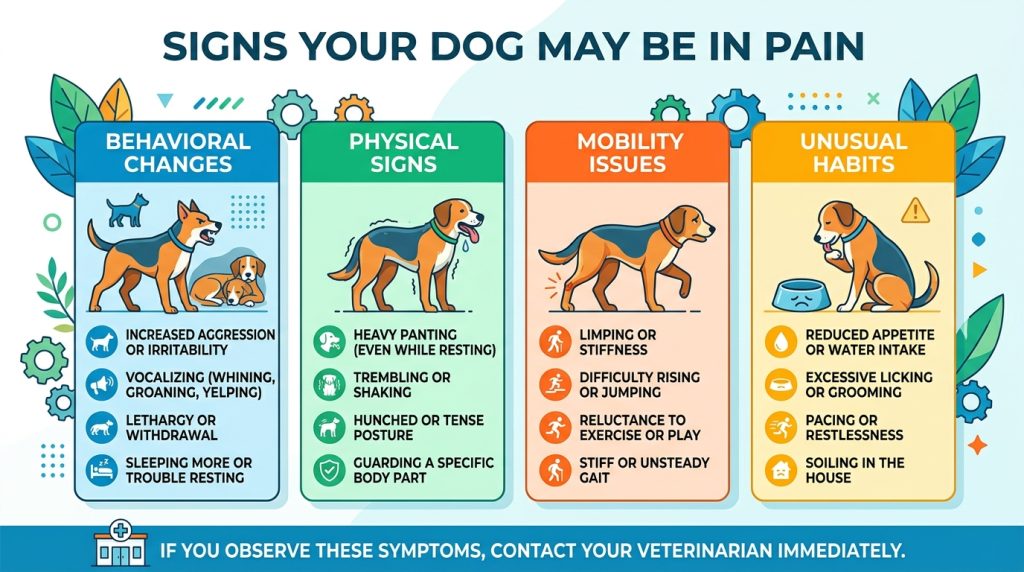
15 Signs Your Dog May Be in Pain
1. Limping or Difficulty Walking
One of the most obvious signs of pain is a change in the way your dog walks.
You might notice:
- Limping
- Favoring one leg
- Walking more slowly
- Refusing to put weight on a paw
This could result from an injury, arthritis, a paw problem, or another medical condition.
2. Changes in Appetite
A dog that suddenly refuses food or treats may not simply be a picky eater.
Pain—especially dental pain or stomach discomfort—can reduce appetite.
If your dog misses more than one meal or refuses water, contact your veterinarian.
3. Sleeping More Than Usual
Dogs naturally sleep a lot, but a sudden increase in sleeping or reluctance to get up may suggest discomfort.
Pain can make normal activities exhausting.
4. Excessive Panting
Panting isn’t always caused by heat or exercise.
Pain, stress, and certain illnesses can also cause dogs to pant more than usual, even when they’re resting.
5. Whining, Whimpering, or Crying
Some dogs become more vocal when they’re hurting.
Others remain completely silent.
Changes in vocalization should always be considered alongside other symptoms.
6. Changes in Behavior
A normally friendly dog may suddenly become:
- Irritable
- Withdrawn
- Less playful
- Unusually clingy
- Easily startled
Behavioral changes often provide early clues that something isn’t right.
7. Aggression When Touched
Pain can make even the gentlest dog react defensively.
If your dog growls, snaps, or pulls away when you touch a particular area, avoid forcing the interaction.
Instead, arrange a veterinary examination as soon as possible.
8. Difficulty Standing or Lying Down
Dogs experiencing joint or muscle pain may hesitate before:
- Standing up
- Sitting down
- Climbing stairs
- Jumping onto furniture
These changes are common in older dogs with arthritis but can occur at any age.
9. Excessive Licking or Chewing
Dogs often lick painful areas instinctively.
Repeated licking of one paw, leg, or joint may indicate discomfort, irritation, or injury.
10. Shaking or Trembling
Not all trembling is caused by fear or cold weather.
Pain, illness, or injury can also make dogs shake.
11. Unusual Body Posture
A dog in pain may stand differently to protect an injured area.
Examples include:
- Hunched back
- Head held low
- Stiff body
- Tail tucked tightly
Changes in posture deserve attention, especially if they appear suddenly.
12. Restlessness
Some painful conditions make it difficult for dogs to get comfortable.
You may notice them:
- Constantly changing positions
- Pacing around the house
- Unable to settle down
13. Reduced Interest in Exercise
If your energetic dog suddenly doesn’t want to walk, play, or chase a ball, pain could be one possible reason.
Always consider recent injuries or health changes.
14. Changes in Grooming
A painful dog may stop grooming themselves as usual.
Others may over-groom one painful area.
Either change can indicate discomfort.
15. Changes in Breathing
Rapid or shallow breathing while resting may signal pain or another medical problem.
This symptom should never be ignored.
Common Causes of Pain in Dogs
Pain can develop for many reasons, including:
- Arthritis
- Dental disease
- Muscle strains
- Broken bones
- Cuts or wounds
- Ear infections
- Skin problems
- Digestive issues
- Urinary problems
- Surgery recovery
Only a veterinarian can determine the exact cause.
When Should You Contact a Veterinarian?
Seek veterinary advice immediately if your dog:
- Cries out in pain.
- Cannot walk.
- Stops eating for more than 24 hours.
- Has trouble breathing.
- Experiences sudden swelling.
- Has been hit by a vehicle or suffered another major injury.
- Becomes suddenly aggressive without an obvious reason.
- Shows severe or worsening symptoms.
Even mild signs that last more than a day or two are worth discussing with your veterinarian.
What You Shouldn’t Do
When you think your dog is in pain, avoid these common mistakes:
❌ Giving human pain medication without veterinary guidance.
Many common medications, including ibuprofen and acetaminophen, can be dangerous or even fatal to dogs.
❌ Ignoring subtle symptoms.
Small behavior changes sometimes appear before more obvious signs.
❌ Forcing exercise.
Allow your dog to rest until you understand what’s causing the discomfort.
How to Help a Dog That May Be in Pain
While waiting for veterinary advice, you can:
- Keep your dog calm.
- Provide fresh water.
- Offer a quiet place to rest.
- Limit strenuous activity.
- Observe any changes in behavior.
- Make notes about symptoms to share with your veterinarian.
Avoid trying home remedies unless your veterinarian recommends them.
Pain vs. Normal Aging
Many owners assume slowing down is simply part of getting older.
While aging can naturally reduce energy levels, persistent limping, difficulty standing, or obvious discomfort should never be dismissed as “just old age.”
Many painful conditions can be treated or managed successfully.
Frequently Asked Questions
Do dogs always cry when they’re in pain?
No. Many dogs remain completely silent, especially during the early stages of discomfort.
Can a dog still wag its tail while in pain?
Yes. Tail wagging doesn’t always mean a dog feels well. Dogs can still greet people affectionately while experiencing discomfort.
Is hiding a sign of pain?
It can be. Some dogs isolate themselves when they don’t feel well.
Can pain cause aggression?
Yes. A painful dog may growl or snap when touched because they’re trying to protect an injured area.
Should I massage a dog that’s in pain?
Not unless you know what’s causing the pain. Some injuries can become worse if handled incorrectly.
Pet Researcher’s Tip 🐾
One thing I found especially interesting while researching canine pain is that owners often notice changes in personality before physical symptoms. A normally playful dog may become quiet, or an affectionate dog may suddenly avoid being touched. These subtle behavior changes can sometimes be your first clue that something isn’t right.
What I Learned While Researching This Topic
Before researching this topic, I thought pain in dogs was usually obvious—a limp, a cry, or a visible injury.
Instead, I discovered that many dogs hide discomfort remarkably well. Sometimes the only clues are small changes in routine, posture, or behavior. That reminded me how important it is to pay attention to the little things. As pet owners, we know our dogs better than anyone, and noticing those changes early can make a real difference.
Final Thoughts
Dogs depend on us to notice when something isn’t right. Because they can’t explain what they’re feeling, even subtle changes in their behavior deserve our attention.
If your dog suddenly becomes less active, stops eating, avoids being touched, or begins acting differently than usual, don’t ignore those signs. While not every symptom means your dog is seriously ill, early veterinary care can often prevent small problems from becoming much bigger ones.
At Pet Control Pro, we’re passionate about helping pet owners better understand their pets through research-based, easy-to-follow guides. While we’re not veterinarians, we believe that learning to recognize early warning signs is one of the best ways to help our pets live healthier, happier lives