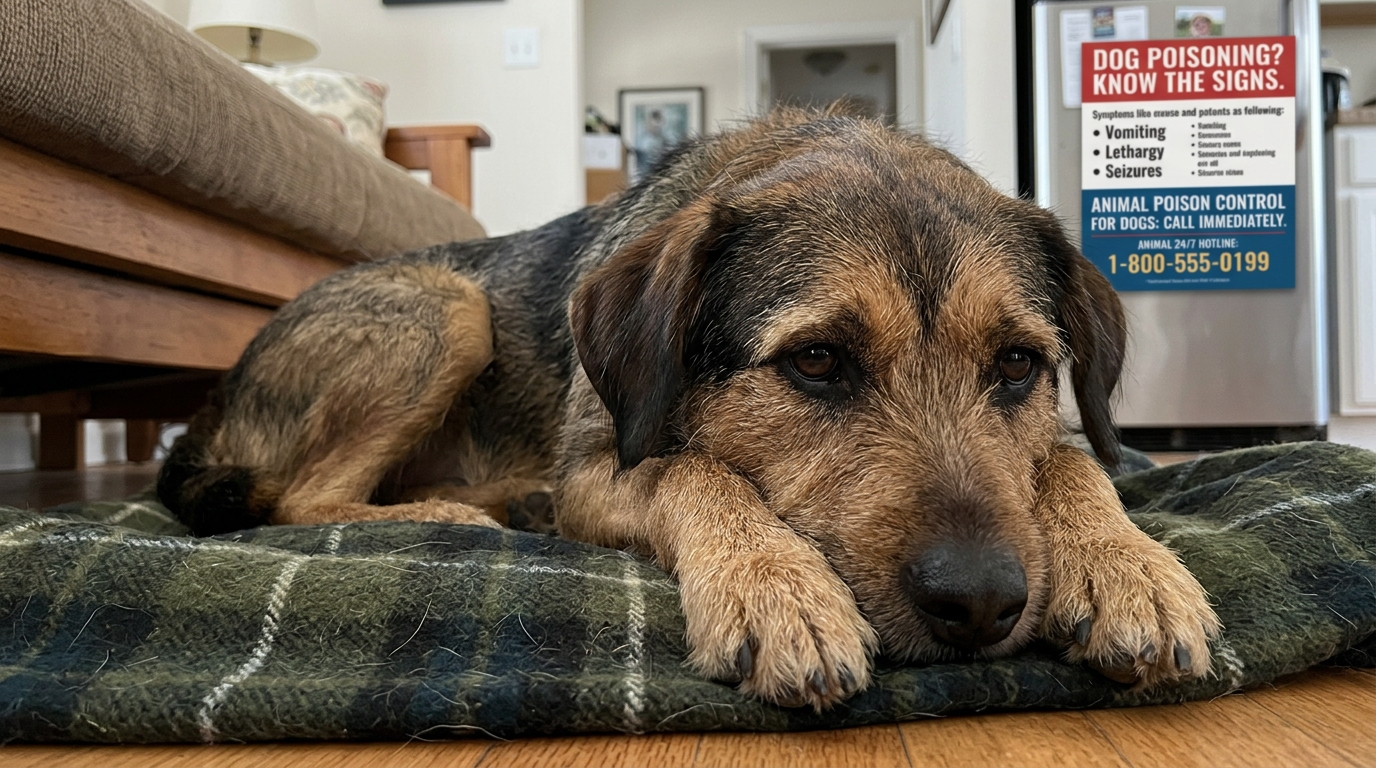
Dogs are naturally curious.
Whether they’re sniffing around the kitchen, chewing on houseplants, or exploring the backyard, it’s easy for them to get into things they shouldn’t. Unfortunately, some everyday items that seem harmless to us can be dangerous—or even life-threatening—to dogs.
If you ever think your dog has eaten something toxic, it’s normal to panic. But staying calm and acting quickly can make a big difference.
As someone who enjoys researching pet care, one thing I’ve learned is that many poisoning cases happen inside the home with common items that owners never expected to be dangerous.
This guide explains the signs of poisoning in dogs, common household toxins, what to do immediately, and what you should never do.
Important: This article is for educational purposes only and is not a substitute for professional veterinary care. If you suspect your dog has been poisoned, contact your veterinarian or an animal poison helpline immediately.
Quick Answer
If you think your dog has been poisoned, remove them from the source of the poison if it’s safe to do so, contact your veterinarian or an animal poison center immediately, and follow their instructions. Do not give home remedies or try to make your dog vomit unless a veterinary professional specifically tells you to.
Common Signs of Poisoning in Dogs
Poisoning symptoms can appear within minutes or may take several hours, depending on the substance.
Watch for signs such as:
- Vomiting
- Diarrhea
- Excessive drooling
- Loss of appetite
- Weakness
- Trembling
- Difficulty walking
- Difficulty breathing
- Seizures
- Pale gums
- Collapse
- Unusual tiredness
- Confusion or disorientation
Some dogs show only one symptom, while others may develop several very quickly.
Common Household Items That Can Poison Dogs
Many poisonings happen with items people use every day.
Some common examples include:
Human Medications
Many medicines that are safe for people can be dangerous for dogs.
Examples include:
- Pain relievers
- Some cold medications
- Certain antidepressants
- Prescription medications
Always store medicines securely and never give your dog medication unless your veterinarian instructs you to.
Chocolate
Chocolate contains substances that dogs cannot process efficiently.
Dark chocolate and baking chocolate are generally more dangerous than milk chocolate.
Xylitol
Xylitol is a sugar substitute found in some:
- Sugar-free gum
- Candy
- Peanut butter
- Toothpaste
- Baked goods
Even small amounts can be dangerous for dogs.
Grapes and Raisins
Some dogs develop serious kidney problems after eating grapes or raisins.
Researchers still don’t fully understand why some dogs are affected while others are not, so it’s safest to avoid giving them altogether.
Onions and Garlic
Large amounts of onions, garlic, leeks, and chives can damage a dog’s red blood cells.
Household Cleaning Products
Products such as bleach, disinfectants, detergents, and drain cleaners should always be stored safely out of your dog’s reach.
Rodenticides (Rat and Mouse Poison)
Rodenticides are especially dangerous because symptoms may not appear immediately.
These products require urgent veterinary attention.
Insecticides and Garden Chemicals
Fertilizers, weed killers, slug bait, and insecticides may all pose risks if ingested.
Always follow label instructions and keep pets away from treated areas until it’s safe.
Certain Houseplants
Some indoor and outdoor plants can be toxic to dogs.
If you’re unsure whether a plant is pet-safe, research it before bringing it into your home.
What Should You Do If Your Dog Has Been Poisoned?
Step 1: Stay Calm
It’s easier said than done, but remaining calm helps you think clearly and act quickly.
Step 2: Remove Access to the Poison
If it’s safe, prevent your dog from eating more of the substance.
Protect yourself first, especially if chemicals are involved.
Step 3: Gather Information
Try to identify:
- What your dog ate
- Approximately how much
- When it happened
- Your dog’s weight
- Any symptoms you’ve noticed
Bring the product packaging or label with you if possible.
Step 4: Contact a Professional Immediately
Call:
- Your veterinarian
- An emergency veterinary clinic
- A trusted animal poison helpline
The sooner they receive accurate information, the better they can advise you.
Step 5: Follow Their Instructions
Different poisons require different treatments.
What helps in one situation could make another much worse.
What You Should NOT Do
Many well-meaning home remedies can be dangerous.
Avoid these common mistakes:
❌ Don’t wait to “see what happens.”
❌ Don’t assume your dog will be fine because they seem normal.
❌ Don’t give milk, oil, bread, or other home remedies unless specifically instructed.
❌ Don’t try to make your dog vomit without professional guidance.
Some substances can cause even more damage if vomited.
How Veterinarians May Treat Poisoning
Treatment depends entirely on the poison involved.
Depending on the situation, your veterinarian may:
- Perform an examination.
- Recommend blood tests.
- Give activated charcoal (in some cases).
- Provide intravenous fluids.
- Administer medications.
- Monitor your dog closely.
- Hospitalize your dog if necessary.
The exact treatment varies depending on the toxin and how quickly treatment begins.
How to Prevent Poisoning at Home
The best treatment is prevention.
Simple habits can reduce the risk:
- Store medications in secure cabinets.
- Keep chocolate and candy out of reach.
- Lock away cleaning supplies.
- Read labels before using garden chemicals.
- Supervise curious puppies.
- Learn which plants are toxic to dogs.
- Keep trash bins securely closed.
- Teach basic commands like “Leave it.”
A few preventive steps can help avoid a frightening emergency.
Frequently Asked Questions
Can a small amount of poison hurt my dog?
Yes. Some toxins are dangerous even in very small amounts, especially for small dogs.
Should I make my dog vomit if they ate something poisonous?
Not unless a veterinarian or poison expert tells you to. In some situations, inducing vomiting can make the injury worse.
How quickly do poisoning symptoms appear?
It depends on the toxin. Some poisons act within minutes, while others may take hours or even days before symptoms develop.
Can dogs recover from poisoning?
Many dogs recover fully when treatment begins quickly. The outcome depends on the type of poison, the amount involved, and how soon veterinary care is received.
Pet Researcher’s Tip 🐾
One thing that surprised me while researching canine poisoning is how many emergencies involve ordinary household products rather than unusual chemicals. Chocolate left on a coffee table, sugar-free gum in a handbag, or medication dropped on the floor can all become serious risks. Keeping these items out of reach is often one of the simplest and most effective ways to protect your dog.
What I Learned While Researching This Topic
Before researching this topic, I assumed poisoning mostly happened outdoors. Instead, I discovered that many cases begin inside the home with everyday items we rarely think twice about.
That reminded me that prevention isn’t only about buying special products—it’s about paying attention to the small habits that keep curious dogs safe.
Final Thoughts
No pet owner wants to face a poisoning emergency, but knowing what to do can help you respond quickly and confidently.
If you suspect your dog has been exposed to a toxic substance, don’t wait for symptoms to appear. Contact your veterinarian or an emergency animal poison service as soon as possible and follow their guidance.
The best protection is prevention. By storing potentially dangerous items safely and staying aware of common household hazards, you can greatly reduce your dog’s risk of accidental poisoning.