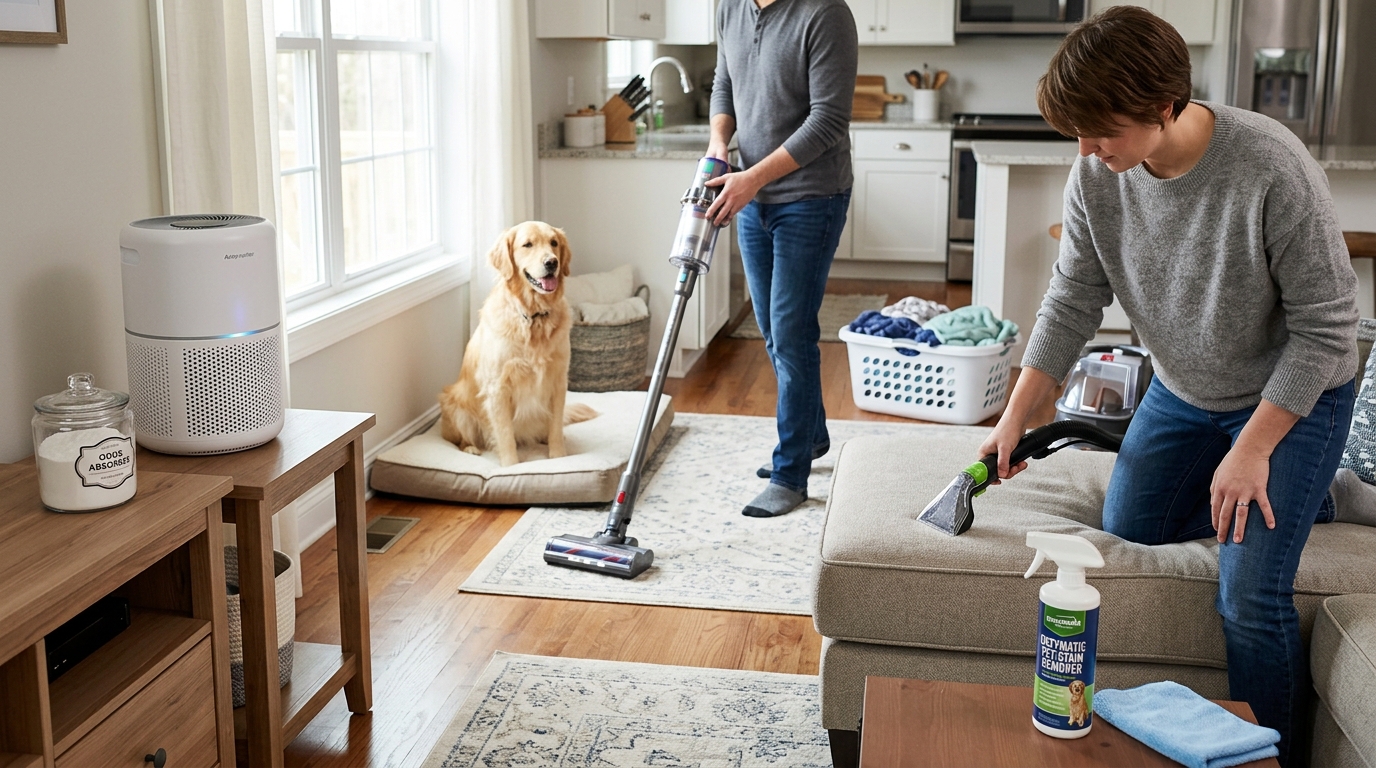
We love our pets, but let’s be honest—they don’t always smell great.
Whether it’s a wet dog, a litter box, an accident on the carpet, or pet bedding that hasn’t been washed in a while, unwanted odors can quickly spread throughout your home.
The good news is that you don’t have to live with lingering pet smells. The secret isn’t masking the odor with air fresheners—it’s finding and removing the source.
As someone who enjoys researching pet care, one thing I’ve learned is that pet odors often return because the odor-causing bacteria or urine residue wasn’t completely removed. A quick wipe or spray may make the room smell better for a few hours, but the odor usually comes back.
In this guide, you’ll learn how to remove pet odor from your home, prevent smells from returning, and keep your living space fresh all year long.
Important: If your pet suddenly develops a strong or unusual odor, especially along with itching, skin changes, ear discharge, or bad breath, consult your veterinarian. Sometimes unpleasant smells are caused by an underlying health problem rather than poor hygiene.
Quick Answer
The best way to remove pet odor is to clean the source thoroughly using the appropriate cleaner, wash pet bedding regularly, vacuum frequently, improve ventilation, and address accidents as soon as possible. Enzyme-based cleaners are often recommended for urine odors because they help break down the compounds that cause lingering smells.
What Causes Pet Odor?
Not every pet smell comes directly from your pet.
Common sources include:
- Urine accidents
- Feces
- Wet fur
- Dirty bedding
- Pet saliva
- Dander
- Shedding hair
- Food spills
- Litter boxes
- Dirty cages
- Oils that naturally build up on your pet’s coat
Identifying the source makes cleaning much more effective.
1. Clean Accidents Immediately
The sooner you clean an accident, the easier it is to remove the smell.
If urine soaks into carpet or furniture, it can penetrate deep into the fibers and padding.
Blot liquid with paper towels or a clean cloth before applying an appropriate cleaner.
Avoid rubbing, which can spread the stain further.
2. Use an Enzyme Cleaner for Urine Odors
Urine odors are difficult to remove because ordinary household cleaners often don’t break down the compounds left behind.
Enzyme-based cleaners are designed to target organic waste and are commonly recommended for pet accidents.
Always follow the instructions on the product label and allow enough time for the cleaner to work.
3. Wash Pet Bedding Regularly
Your pet’s bed collects:
- Hair
- Skin oils
- Saliva
- Dirt
- Dander
Wash bedding according to the manufacturer’s care instructions.
Many owners notice a significant improvement in home odor simply by washing bedding more often.
4. Vacuum Frequently
Pet hair traps odors.
Vacuuming helps remove:
- Hair
- Dander
- Dirt
- Dust
Don’t forget:
- Under furniture
- Corners
- Upholstered furniture
- Pet sleeping areas
If possible, use a vacuum designed to handle pet hair.
5. Bathe and Groom Your Pet
Regular grooming helps reduce odor buildup.
Depending on your pet’s breed and coat type, grooming may include:
- Brushing
- Bathing when needed
- Nail trimming
- Ear cleaning (when recommended)
- Professional grooming if appropriate
Avoid overbathing, as it can dry out the skin in some dogs.
6. Keep Litter Boxes and Cages Clean
If you have cats, rabbits, guinea pigs, birds, or other small pets, regular cleaning is essential.
Remove waste daily when possible and clean the enclosure thoroughly on a regular schedule.
7. Improve Air Circulation
Fresh air can help reduce lingering odors.
Try:
- Opening windows when weather permits
- Using exhaust fans
- Replacing HVAC filters regularly
- Running an air purifier if appropriate
Good airflow can make your home feel fresher.
8. Wash Pet Toys and Accessories
Food bowls, collars, harnesses, blankets, and toys can all collect odor over time.
Wash washable items regularly and replace worn items when needed.
9. Clean Floors and Furniture
Pet odors often settle into:
- Carpets
- Rugs
- Sofas
- Curtains
- Hardwood floors
Regular deep cleaning helps remove odor-causing residue instead of simply covering it up.
10. Don’t Forget Your Pet’s Teeth and Ears
Sometimes the smell isn’t coming from your house—it’s coming from your pet.
Bad breath or foul-smelling ears can sometimes indicate:
- Dental disease
- Ear infections
- Skin infections
If you notice a sudden or unusually strong odor from your pet, schedule a veterinary examination.
Common Mistakes That Keep Pet Odors Around
Using Air Fresheners Alone
Air fresheners may temporarily mask odors but usually don’t remove the source.
Waiting Too Long to Clean Accidents
Older stains become more difficult to remove completely.
Skipping Regular Grooming
Hair, oils, and dander continue to build up over time.
Forgetting Hidden Areas
Pet odors often linger under furniture, inside crates, or in favorite sleeping spots.
Natural Ways to Reduce Pet Odor
Some pet owners like to combine regular cleaning with simple household practices, such as:
- Opening windows for fresh air
- Washing blankets frequently
- Vacuuming often
- Cleaning food bowls daily
- Keeping litter boxes fresh
Be cautious with essential oils and homemade cleaning mixtures. Some ingredients that are safe for people may be harmful to pets, so always research products before using them around animals.
Frequently Asked Questions
Why does my house still smell like pets after cleaning?
Odors often remain because urine or organic material has soaked into carpets, furniture, flooring, or padding where surface cleaning can’t reach.
What’s the hardest pet odor to remove?
Urine is usually one of the most persistent because it can penetrate deep into porous materials if not cleaned quickly.
How often should I wash my pet’s bedding?
It depends on your pet and lifestyle, but washing bedding regularly can greatly reduce odor buildup.
Can pet odor indicate a health problem?
Yes. A sudden or unusually strong odor from your pet may indicate a skin condition, ear infection, dental disease, or another health issue that should be evaluated by a veterinarian.
Pet Researcher’s Tip 🐾
One thing that surprised me while researching pet odors is that the smell you notice isn’t always where the problem started. For example, urine can spread underneath carpet padding or furniture, allowing odors to return even after the visible stain has disappeared. Finding and treating the entire affected area is often the key to solving the problem.
What I Learned While Researching This Topic
Before researching pet odor, I assumed buying stronger air fresheners would solve most problems. Instead, I discovered that lasting odor removal usually depends on cleaning the source rather than covering up the smell.
That reminded me that good pet care isn’t about making your home smell different—it’s about keeping both your home and your pet clean and healthy.
Final Thoughts
Removing pet odor takes more than a quick spray of air freshener. The most effective approach is to identify the source, clean it thoroughly, and maintain regular grooming and housekeeping routines.
By cleaning accidents promptly, washing bedding, vacuuming often, and paying attention to your pet’s overall health, you can enjoy a cleaner, fresher home without sacrificing the joy of sharing it with your furry companion.