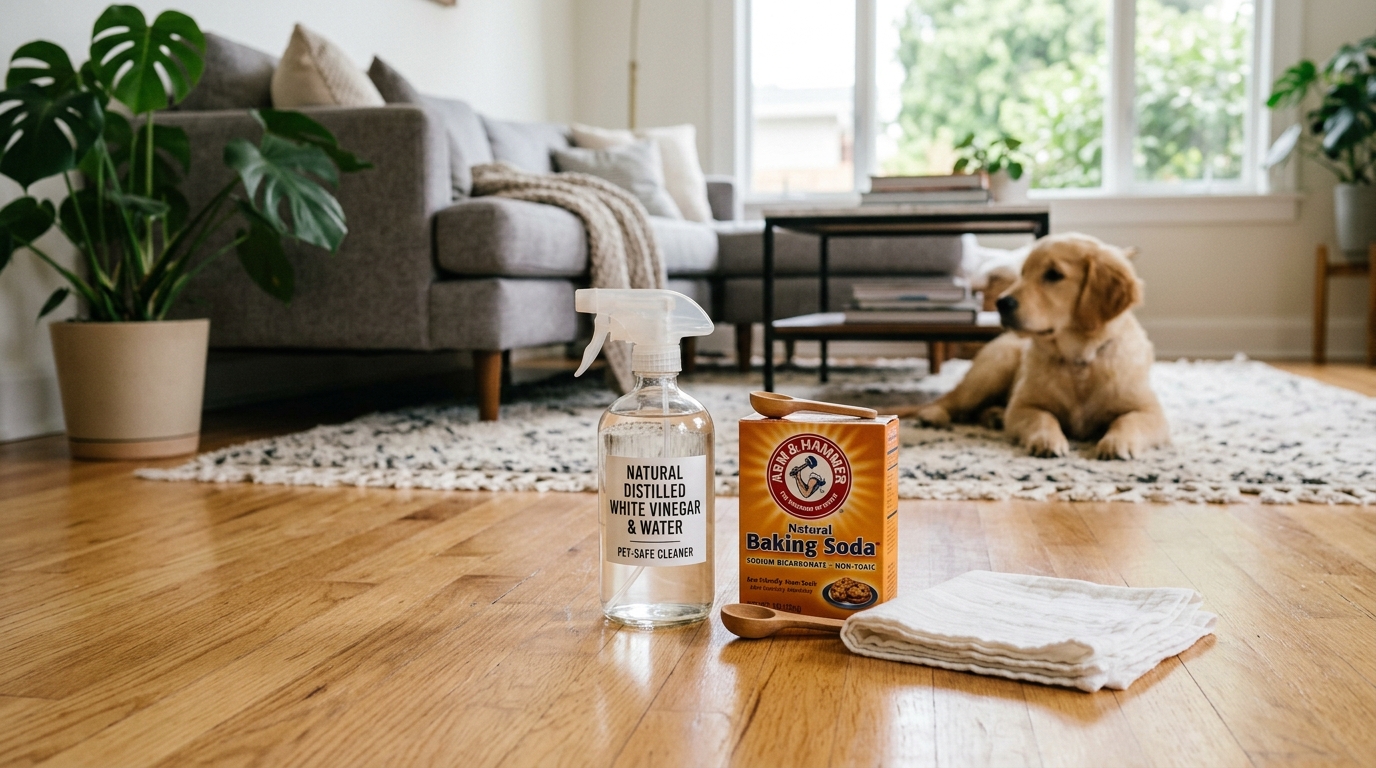
Accidents happen—even with the best-trained pets.
Whether it’s muddy paw prints, a urine accident, vomit, or spilled food, pet stains can quickly become frustrating. Many commercial stain removers work well, but some pet owners prefer using simple household ingredients whenever possible.
The key is understanding that natural stain removal works best when you act quickly. Fresh stains are much easier to clean than ones that have dried into carpets or furniture.
As someone who enjoys researching pet care, I discovered that many natural cleaning methods can help lift stains from common household surfaces. However, it’s equally important to know their limits. Some stubborn stains—especially old urine stains—may require specialized pet-safe cleaners to remove both the stain and the odor completely.
This guide explains how to remove common pet stains naturally while helping protect your home and your pets.
Important: Before using any cleaning solution, test it on a small hidden area first to make sure it doesn’t damage or discolor the surface. Keep pets away from recently cleaned areas until they’re completely dry.
Quick Answer
To remove pet stains naturally, blot the stain immediately, clean it with warm water and mild household ingredients such as white vinegar or baking soda where appropriate, and allow the area to dry completely. While natural methods may help remove fresh stains, older or stubborn urine stains often require an enzyme-based cleaner to break down the odor-causing compounds.
Why Acting Quickly Matters
The longer a stain sits, the harder it becomes to remove.
Fresh stains are less likely to:
- Soak deep into carpet padding
- Leave permanent discoloration
- Cause lingering odors
- Encourage pets to return to the same spot
Cleaning accidents as soon as possible usually gives the best results.
Common Pet Stains Around the Home
Pet owners often deal with:
- Urine
- Vomit
- Muddy paw prints
- Drool
- Food stains
- Feces
- Hairball stains (cats)
Each type of stain may require a slightly different cleaning approach.
Step 1: Blot—Don’t Rub
If the stain is still wet:
- Use paper towels or a clean cloth.
- Press gently to absorb as much liquid as possible.
- Repeat until little moisture remains.
Avoid rubbing.
Rubbing can push the stain deeper into the fabric or carpet fibers.
Step 2: Rinse With Cool or Warm Water
After blotting:
- Lightly rinse the area with clean water.
- Blot again.
Avoid soaking carpets or upholstery, as too much moisture can make drying more difficult.
Step 3: Try Simple Household Cleaning Ingredients
Some common household ingredients may help with fresh stains.
White Vinegar
A diluted white vinegar solution is commonly used by many homeowners for light cleaning.
It may help loosen some stains and reduce mild odors.
Avoid using vinegar on natural stone surfaces such as marble or limestone, where it may cause damage.
Baking Soda
Baking soda is often used after cleaning to help absorb moisture and reduce lingering odors.
Once the area is completely dry, simply vacuum away any remaining powder.
Mild Dish Soap
For muddy paw prints or food stains, a small amount of mild dish soap mixed with water may help lift dirt from washable surfaces.
Use only a small amount and rinse thoroughly afterward.
Step 4: Allow the Area to Dry Completely
Moisture trapped in carpets or furniture can encourage unpleasant odors.
Help the area dry by:
- Opening windows
- Using fans
- Increasing airflow
Avoid letting pets walk on the area until it’s dry.
When Natural Cleaning May Not Be Enough
Natural methods work best for fresh, light stains.
However, older urine stains often soak deep into:
- Carpet padding
- Upholstery
- Wooden flooring
- Concrete
In these situations, enzyme-based cleaners are often recommended because they help break down the organic compounds responsible for lingering odors.
Natural Cleaning Tips for Different Surfaces
Carpets
- Blot immediately.
- Avoid oversaturating the carpet.
- Dry thoroughly.
Upholstery
- Test cleaners on a hidden area first.
- Use minimal moisture.
- Allow extra drying time.
Hardwood Floors
Clean spills promptly.
Standing moisture can damage wood over time.
Tile Floors
Tile is generally easier to clean, but don’t forget the grout lines, where stains may collect.
Common Mistakes to Avoid
Scrubbing Too Hard
Aggressive scrubbing may spread stains or damage fabric fibers.
Using Hot Water on Every Stain
Some stains may set more deeply when exposed to very hot water.
Always check care instructions for delicate materials.
Mixing Household Chemicals
Never mix cleaning products unless you’re certain they’re safe to combine.
Some chemical combinations can release dangerous fumes.
Ignoring Lingering Odors
If your pet can still smell urine, they may return to the same location.
Sometimes removing the odor completely requires more than natural cleaning alone.
How to Help Prevent Future Stains
Prevention is always easier than cleanup.
Simple habits include:
- Taking dogs outside regularly.
- Cleaning litter boxes frequently.
- Wiping muddy paws before coming indoors.
- Addressing medical issues that cause accidents.
- Using washable pet bedding.
Frequently Asked Questions
Does vinegar remove pet urine stains?
Vinegar may help clean some fresh stains and reduce mild odors, but older urine stains often require enzyme-based cleaners to completely break down the odor-causing compounds.
Is baking soda safe around pets?
Baking soda is commonly used in household cleaning, but pets should not eat large amounts of it. Keep your pet away from loose powder and cleaned areas until you’ve finished vacuuming and the surface is dry.
Can natural cleaners remove old pet stains?
Sometimes, but not always. Older stains may require repeated cleaning or specialized products.
Why does the stain keep coming back?
In many cases, the visible stain is gone, but residue remains beneath the surface. This is especially common with urine that has soaked into carpet padding or upholstery.
Pet Researcher’s Tip 🐾
One thing that surprised me while researching pet stain removal is that the stain you see is often much smaller than the stain underneath. Liquids can spread below carpets and furniture, making the affected area much larger than it appears. That’s one reason odors sometimes return even after the visible stain has disappeared.
What I Learned While Researching This Topic
Before researching natural stain removal, I assumed stronger cleaning products always worked better. Instead, I discovered that acting quickly often matters more than using powerful chemicals. Fresh stains are much easier to remove, while older stains may need specialized products designed for pet accidents.
That reminded me that timing is often just as important as the cleaning method itself.
Final Thoughts
Natural cleaning methods can be an effective way to remove many fresh pet stains while reducing the need for harsh chemicals around your home. The most important step is acting quickly, blotting rather than scrubbing, and allowing the area to dry thoroughly.
For stubborn urine stains or lingering odors, don’t be discouraged if natural methods aren’t enough. Specialized enzyme-based cleaners are often the better option because they’re designed to break down the compounds that ordinary cleaners leave behind.