
Bringing a pet into your home is exciting, but it also comes with responsibility. Whether you have a playful puppy, a curious kitten, or another companion animal, providing proper care helps them live a healthier and happier life.
The good news is that good pet care isn’t about being perfect. It’s about building simple daily habits that protect your pet’s health and strengthen the bond you share.
At Pet Control Pro, we enjoy researching pet behavior, health, training, and everyday care so we can share practical information with fellow pet lovers. While we’re not veterinarians, we believe that informed pet owners are better prepared to recognize problems early and make thoughtful decisions for their animals.
This guide covers essential pet care advice that every owner should know.
Important: Every pet is different. The information in this guide is educational and should not replace advice from your veterinarian, especially if your pet is sick or injured.
Quick Answer
Good pet care includes providing nutritious food, clean water, regular exercise, mental stimulation, grooming, preventive veterinary care, safe training, and lots of patience. Paying attention to changes in your pet’s behavior can also help you spot health problems early.
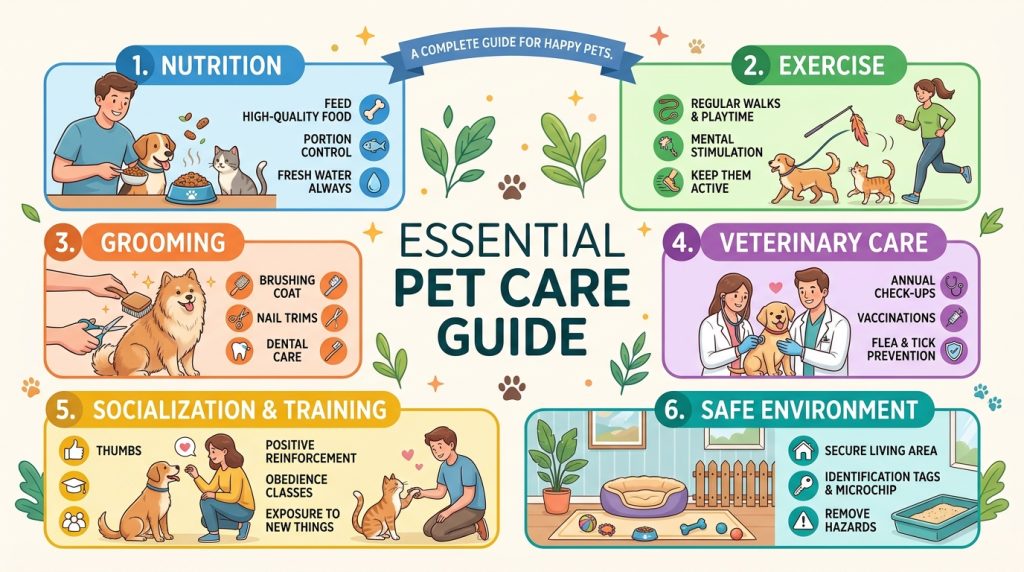
1. Feed a Balanced Diet
Choose food that matches your pet’s:
- Age
- Size
- Activity level
- Health needs
Avoid overfeeding, as obesity can lead to many health problems.
2. Always Provide Fresh Water
Clean drinking water should be available throughout the day.
Wash water bowls regularly to help prevent bacteria from building up.
3. Give Your Pet Daily Exercise
Exercise supports:
- Healthy weight
- Strong muscles
- Joint health
- Mental well-being
The amount of exercise depends on your pet’s breed, age, and overall health.
4. Keep Their Mind Active
Mental stimulation can help reduce boredom and unwanted behaviors.
Ideas include:
- Puzzle toys
- Training sessions
- Scent games
- Interactive play
- New walking routes
5. Learn Your Pet’s Body Language
Pets often communicate through body posture, facial expressions, ears, and tails long before they make a sound.
Understanding these signals can help you respond appropriately.
6. Groom Regularly
Regular grooming helps you:
- Remove loose fur
- Check for skin problems
- Reduce shedding
- Spot fleas or ticks early
7. Schedule Regular Veterinary Checkups
Routine examinations help detect many health problems before they become serious.
Preventive care is often easier and less expensive than treating advanced illness.
8. Keep Vaccinations Up to Date
Vaccinations protect pets from several serious diseases.
Your veterinarian can recommend a schedule appropriate for your pet.
9. Protect Against Fleas, Ticks, and Parasites
External and internal parasites can affect your pet’s health year-round.
Use veterinarian-recommended prevention appropriate for your location and pet.
10. Brush Teeth When Possible
Dental health is often overlooked.
Poor oral hygiene may contribute to pain, infection, and other health problems.
11. Maintain a Healthy Weight
Extra weight can increase the risk of:
- Arthritis
- Diabetes
- Heart disease
- Reduced mobility
Monitor your pet’s weight regularly.
12. Train With Patience
Positive reinforcement helps many pets learn while building trust.
Consistency is usually more effective than punishment.
13. Socialize Safely
Gradual, positive experiences with people, animals, and environments can help many pets become more confident.
14. Keep Dangerous Items Out of Reach
Store safely:
- Medications
- Cleaning products
- Toxic foods
- Garden chemicals
Curious pets often investigate with their mouths.
15. Keep Identification Updated
Ensure your pet has:
- An ID tag
- Current contact information
- A registered microchip where available
This greatly improves the chances of being reunited if your pet gets lost.
16. Make Your Home Pet-Friendly
Remove hazards such as:
- Loose electrical cords
- Small objects that can be swallowed
- Toxic plants
- Unsecured trash bins
17. Watch for Changes in Behavior
Changes in appetite, activity, sleep, or bathroom habits can sometimes signal illness.
Don’t ignore sudden behavioral changes.
18. Give Plenty of Affection
Many pets thrive on positive interaction with their families.
Quality time helps strengthen your relationship.
19. Keep a Routine
Pets often feel more secure when meals, walks, playtime, and bedtime happen consistently.
20. Continue Learning
Pet care recommendations evolve over time.
Reading trusted resources and discussing questions with your veterinarian helps you make informed decisions.
Frequently Asked Questions
What is the most important part of pet care?
Providing proper nutrition, clean water, preventive healthcare, exercise, and a safe environment are all essential.
How often should I take my pet to the veterinarian?
Healthy adult pets often benefit from regular wellness exams, but the ideal schedule depends on your pet’s age and health.
How can I tell if my pet is unhappy?
Changes in appetite, behavior, sleeping habits, or activity levels may indicate stress or illness.
Is exercise important for indoor pets?
Yes. Even indoor pets benefit from daily physical activity and mental enrichment.
Pet Researcher’s Tip 🐾
One thing that stands out from researching pet care is that small daily habits often have the biggest long-term impact. Fresh water, regular walks, routine grooming, and paying attention to changes in behavior may seem simple, but together they help build a healthier and happier life for your pet.
What I Learned While Researching Pet Care
Before diving into pet care topics, I thought caring for a pet mainly meant feeding them and taking them for occasional checkups. The more I researched, the more I realized that good pet care is about understanding your pet’s physical and emotional needs every day.
That perspective has shaped how we approach every article at Pet Control Pro—breaking complex topics into practical advice that everyday pet owners can understand and apply.
Final Thoughts
Being a responsible pet owner doesn’t require perfection. It starts with learning, observing your pet, and making small improvements over time.
Whether you’re raising a new puppy, caring for a senior dog, or sharing your home with another companion animal, every positive step you take contributes to your pet’s health and well-being.